Turkish delight can be a confusing first candy. A small square arrives dusted in white powder, sometimes translucent, sometimes packed with pistachios, and sometimes in a flavor that seems to belong in a perfume shop rather than a sweet shop. Then it does something unexpected: instead of snapping like a hard candy or bouncing like a gummy, it gives way slowly. It is soft, dense, a little springy, and eager to cling to a knife or a fingertip.
That is the point. Turkish delight, more often called lokum where it comes from, is not one flavor to memorize. It is a family of sugar-and-starch confections with a distinctive kind of set. The flavor may be rose, lemon, mastic, bergamot, pomegranate, or something else entirely. Nuts may be folded in, pressed around the outside, or left out. The useful constant is the texture: a starch gel cooked with sugar, then cut into small pieces and protected with a dry coating.
Once you meet lokum on its own terms, it becomes a much more interesting candy. This is not a hunt for the “best” flavor. It is a short field guide to noticing the structure, choosing a piece with intention, and making the first bite less mysterious.
Start with the name, then leave the mythology alone
“Turkish delight” is the English name; lokum is the name worth learning because it leads back to the candy rather than to a single box or a single story. The FAO AGRIS record for a food-science review of lokum describes it as a confection made from sugar, starch, and water, with fruits or nuts added in some versions. That plain description is a good anchor. It tells us more about what a piece does in the mouth than a romantic origin tale can.
There are many confidently repeated stories about one inventor, one shop, or one exact starting date. Food history is usually less tidy. JSTOR Daily’s account of lokum notes both the 18th-century dating used by food historian Mary Işın and the care needed around famous invention stories. The more useful conclusion is not that the candy has no history. It is that a long confectionery tradition deserves more attention than a single neat anecdote.
That restraint makes tasting easier, too. You do not need to prove that one square is the original version of anything. You only need to ask: what is this maker doing with the starch gel, the sweetness, the perfume-like flavor, the nut, and the coating?
Why lokum feels unlike a gummy
Many soft candies look alike from a distance. Their ingredient systems are not alike. Gelatin gummies get much of their chew from gelatin; fruit jellies may use pectin; lokum is defined by starch. A 2021 paper in the Journal of Agricultural and Food Chemistry calls Turkish delights traditional sugar-based jelly confections with starch as the gelling agent. That distinction is worth noticing because it helps explain the bite.
A typical lokum piece does not rebound sharply after you press it. Instead, it resists gently, yields, and may leave a clean but slightly tacky cut surface. The center can feel smooth or faintly granular, depending on the formula and how it was cooked. A gummy often feels elastic. A gelatin dessert feels wetter and more wobbly. A good lokum sits somewhere else: stable enough to cut into a cube, soft enough to compress, and rich enough that a small piece can feel complete.
Sugar matters here, too. It is not only a sweetener. The balance of sugar, water, and starch is part of the candy’s body and shelf behavior. The same ACS paper explains why producers study sugar sources and texture in lokum: a change that makes a candy less likely to crystallize can also change its character. For an eater, the practical result is simple. Two pieces with the same flavor label can have very different personalities. One may be tender and satiny; another may be firmer, stickier, or more resistant.
Do not treat that difference as a test you can fail. Think of it as a reason to slow down. This candy is telling you how it was made through pressure and release.
The white powder has a job
The powder on lokum is often mistaken for decoration. It is more useful than that. Freshly cut starch-and-sugar candy has an exposed, sticky surface. A coating of starch, powdered sugar, or a mix of the two helps keep pieces from welding together in the box. It also changes the first moment of eating: dry on the lips, then soft as it absorbs moisture.
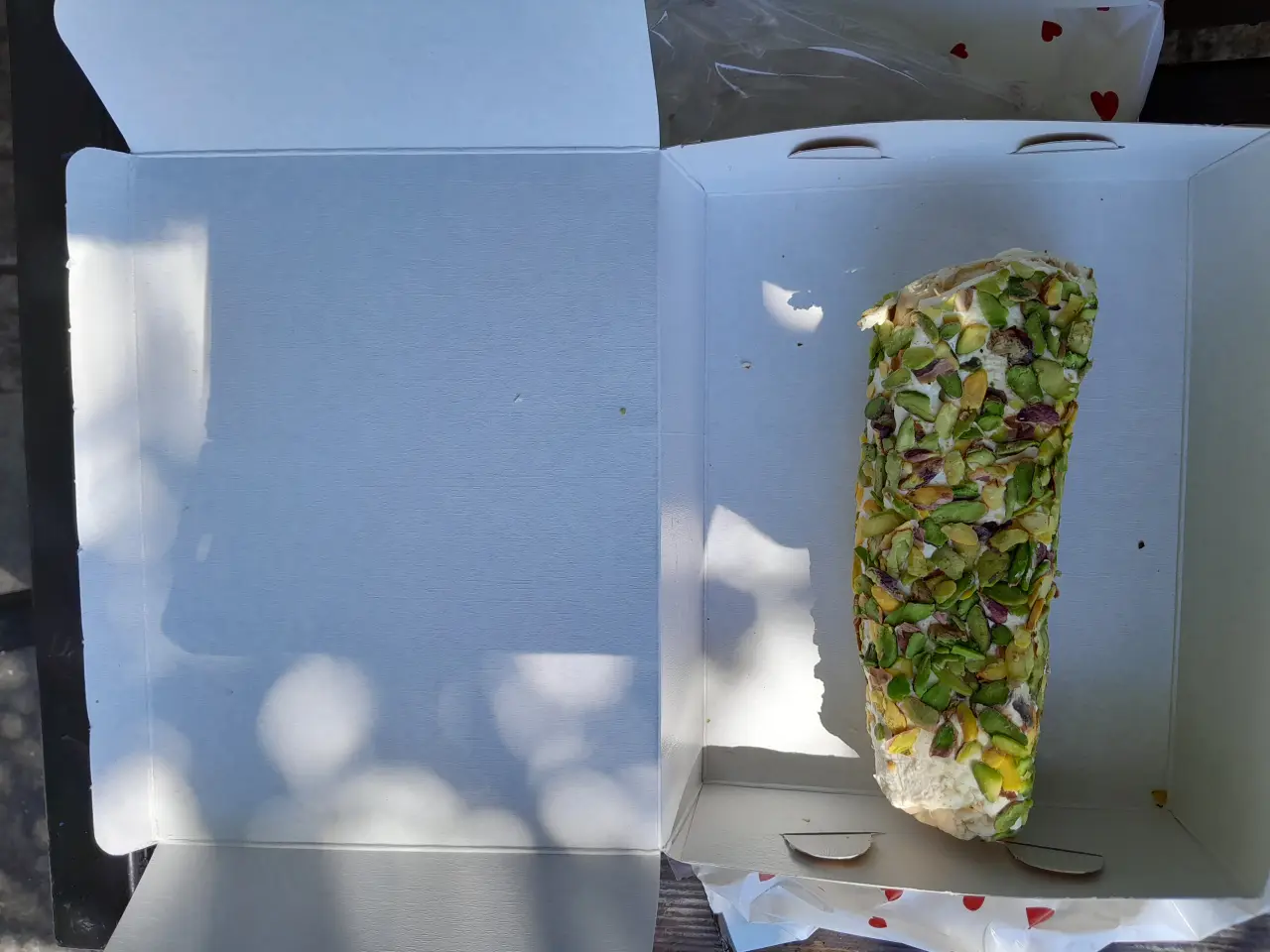
That contrast is part of the experience. A heavily powdered piece opens with a faint chalky sweetness before the center becomes glossy and yielding. A piece rolled in chopped pistachios, coconut, or other additions opens with a different signal: crunch, aroma, or oil from the nut, followed by the quiet gel beneath it.
Look before you bite. A clean, even coat suggests that the pieces have been handled with care, but it is not a promise of superior flavor. A little loose starch in the box is normal. So is a slightly tacky edge after the candy has warmed. What you want to avoid is a piece that has fused into an unrecognizable lump or has a wet, leaking surface. Those are storage problems, not hidden signs of authenticity.
If you are serving lokum, give each variety a little breathing room on the plate. Do not pile rose, citrus, nut, and coconut pieces into one mountain and expect their surfaces to remain separate. Small paper cups or a few inches of space make the tasting calmer and the candy easier to pick up.
A four-step way to taste one square
The best tasting method is deliberately modest. You do not need a flight of ten varieties, a scorecard, or a lecture. Take one piece and let its texture arrive in sequence.
- Look at the cut. Is the center clear, cloudy, creamy, or crowded with nuts? A transparent-looking center often gives the impression of a lighter bite, while a nut-filled piece announces more texture before you taste it.
- Press it once. Use a clean fingertip or the edge of a spoon. Does it spring back quickly, hold the dent, or feel firm enough to resist? You are not grading freshness with a laboratory instrument; you are setting an expectation for the bite.
- Take a small bite. Let the outside meet your tongue first. Notice the coating, then the center. Does it dissolve, pull slightly, or yield in one clean piece? If there are nuts, listen for whether they are a crisp accent or the main event.
- Wait ten seconds. Perfumed flavors can change after the sugar rush. Rose may feel floral first and candy-like later. Lemon may brighten after the center warms. Pistachio can linger after the sweet gel has gone. Water between samples is enough to reset your palate.
The goal is not to invent an impressive vocabulary. Plain words are better: soft, firm, dry, sticky, floral, citrusy, nutty, long, quick. Once you name the action, a preference becomes easier to repeat. “I like the firm lemon pieces with a dry coat” is more useful than “I guess I like Turkish delight.”
Choose a flavor by the contrast you want
Because lokum’s texture is steady, flavor and additions can do the dramatic work. Here are four easy routes through a box.
Floral: rose or orange blossom
Floral lokum is often the version people remember most strongly, for good or bad. Its flavor can feel elegant, old-fashioned, or unexpectedly intense. The right way to approach it is with a small piece, not a large mouthful. Let the perfume arrive with the sugar, then see whether it settles into something gentle. If it feels too soapy, do not force it. That is a preference, not a character flaw. Move to citrus or nut on the next piece.
Citrus: lemon, orange, or bergamot
Citrus gives the sweetness an edge. It can make a soft piece feel lighter, especially after a meal. A lemon lokum may be the easiest entry point for someone who does not want a floral flavor, because the aroma is familiar even when the texture is new. Keep the pairing simple: tea, water, or a plain biscuit. Strong mint or spicy snacks can erase the detail you are trying to notice.
Nut-filled: pistachio, hazelnut, or walnut
Nuts turn the candy into a two-part bite. The gel supplies slow resistance; the nut supplies interruption. The FAO review specifically notes fruits or nuts as additions, and that practical detail explains why a pistachio piece feels less uniform than a plain cube. Choose this style when you want contrast and a little savory depth alongside the sugar.
Nut-filled lokum also calls for ordinary common sense. If you are sharing a box, say what is in it. Do not assume a green coating means pistachio, or that a plain-looking square is free of nuts. Read the maker’s label and follow it for ingredients and allergen information.
Plain: the texture test
Plain lokum can be the most revealing choice. Without a nut or a strong flavor to distract you, the starch gel has nowhere to hide. A simple square lets you notice the coating, the yield, and the finish. If you are comparing makers, start here. It is the candy equivalent of tasting bread before putting jam on it.
Tea is a companion, not a rule
Lokum is often placed beside tea or coffee, and the pairing makes practical sense: a warm, unsweetened drink can clear sweetness between small bites. But it is not a required ritual. The candy does not become more “real” because it sits next to a particular cup. Use the beverage as a reset button, not a costume.
Black tea is a useful first companion because its bitterness provides contrast without needing another flavor. A mild green tea can work if it is not aggressively vegetal. Turkish coffee is often served with sweets, but its dense, roasted profile can become the loudest thing in the room. If your purpose is to study lokum, start with water or tea; if your purpose is hospitality, choose whatever your guests actually enjoy.
This distinction matters at a gathering. A thoughtful candy table does not need to imitate a place it is not. Say what you are serving, label it clearly, offer a drink, and let people decide whether a floral or nutty piece sounds good. Curiosity travels well; pretending expertise does not.
Build a small soft-candy comparison
Lokum is especially good in a two- or three-candy comparison because its starch-set texture gives it a clear role. Put one piece next to a gummy or fruit chew, and, if you like, a slowly dissolving hard candy. The question is not which one wins. Ask how each one handles time.
A gummy tends to ask for chewing. Lokum asks you to press and let it yield. A hard candy asks for patience as it dissolves. Together they make a tiny lesson in how confectioners can begin with sweetness and create entirely different experiences through structure.
For the hard-candy side of that comparison, Pearls Candy & Nuts’ hard-candy aisle is a verified place to browse a contrasting format. Choose one simple flavor rather than several competing bags. This is a tasting exercise, not a shopping challenge; one lokum, one gummy, and one hard candy are plenty.
Serve the pieces at room temperature and keep the portions small. That is enough to make the contrasts visible. The gummy pulls. The lokum compresses. The hard candy fades slowly. Once you notice those three timelines, you may find yourself reading a candy label differently.
What to remember after the box is closed
Turkish delight is not a single pink cube, a single flavor, or a souvenir reference. It is a starch-and-sugar confection whose texture makes room for many different accents. The powder is functional. The nut is a contrast. The perfume is a choice. The history is richer than a one-line origin story.
The easiest way to enjoy it is also the most respectful: call it lokum when that is useful, avoid overselling a legend, read the label, and take one deliberate bite before you decide. If a floral piece is not for you, try citrus. If the perfume feels too strong, try plain. If you want a firmer counterpoint, add a hard candy to the plate.
That is the small gift of lokum. It teaches that a candy can be memorable without being loud. Sometimes the most interesting part is the quiet pause between a dry coating and a soft center.