A sugar skull can be small enough to rest in a palm, bright enough to stop a passerby, and sweet enough to tempt an immediate bite. Those facts make it easy to mistake one for a cheerful seasonal novelty. But a calavera de azúcar is not simply a skull-shaped candy. In the setting of Día de Muertos, it can be part of a larger language of remembrance: a name, an offering, a color, a story, and an invitation to speak about someone who is gone.
That is why it helps to slow down before putting sugar skulls in the same mental box as plastic spiders, generic orange-and-black sweets, or a costume-party centerpiece. A general overview of Día de Muertos distinguishes the Mexican holiday from Halloween even though the occasions appear beside one another on many American calendars. A sugar skull makes the most sense when we first understand the family-centered celebration around it.
The good news is that the right starting point is wonderfully human. You do not need to master a recipe, buy a decorative kit, or borrow someone else’s family practice. You can learn to recognize what the symbols are doing, ask better questions, and treat a colorful candy with the attention it deserves.
Start with the occasion, not the skull
UNESCO’s description of the Indigenous festivity dedicated to the dead places the celebration at the end of October and beginning of November, when families prepare to welcome deceased relatives in homes and cemeteries. UNESCO recognizes the tradition as Intangible Cultural Heritage and describes it as a living practice rather than a frozen historical display.
That word, living, is important. Día de Muertos is often represented in a quick montage of marigolds, face paint, skeletons, candles, and decorated food. The montage may be visually accurate, but it can remove the reason those things are gathered. The center is remembrance. An ofrenda, or offering, can hold photographs, candles, flowers, food, drink, and personal objects associated with someone being remembered. Details vary by region and family, so there is no single universal altar layout and no single list that can explain every household.
The shared idea is more useful than a rigid checklist: an ofrenda gives memory a place to appear. It turns “we remember this person” into visible choices—what they enjoyed, what mattered to them, which stories still make the family laugh, and what food calls them to mind.
Sugar matters here because food is personal. A favorite fruit, a familiar dish, a glass of water, or a sweet can carry more feeling than an abstract symbol. It says that remembrance is not only solemn. It can be specific, affectionate, and full of ordinary pleasure. The sweet is not there to make death cute. It is there because the person remembered had tastes, habits, and a place at the table.
What “calavera” means in this context
The Spanish word calavera means skull, but it travels through Día de Muertos in more than one form. There are skull images, skull figures, literary calaveras—short playful verses associated with the season—and sugar skulls. The word is a doorway into a visual tradition, not a one-to-one translation for a particular piece of candy.
For a useful general overview, the reference entry on calaveras explains that sugar skulls are associated with Día de Muertos and that names can be written across their foreheads. That name is one reason a finished sugar skull can feel very different from a novelty confection. It can name a living person, a remembered person, or a playful subject; context matters. The decoration is not merely a pattern. It can make the object personal.
Notice what this changes. A standard piece of candy usually promises a flavor, a texture, or a surprise inside. A named sugar skull also asks, “Whose name is this?” That question can open a story. It can lead to a memory, a family joke, a description of a favorite meal, or a moment of grief. The sweetness and the symbolism work together instead of competing.
It is also worth separating the sugar skull from the familiar face-paint motif often seen in parades, movies, and advertising. Both may use skull imagery, but they are not the same object and do not carry a single fixed meaning. Treating every brightly painted skull as an interchangeable design flattens a tradition with many local expressions. When in doubt, use the more precise word for the thing you mean: an ofrenda, a sugar skull, a paper decoration, a skeletal sculpture, or face paint.
Precision sounds small, but it is a form of respect. It replaces “that skull thing” with a real name and replaces a borrowed vibe with curiosity.
Why color does not mean the subject is frivolous
The most surprising feature of many Día de Muertos displays is their brightness. Orange cempasúchil flowers, richly colored paper, candles, fruit, painted figures, and sugar decorations can create a scene that looks festive rather than mournful. To someone used to quiet, black-clad images of bereavement, that can seem like a contradiction.
It is not. Grief and joy often occupy the same memory. A family can miss someone intensely and still smile at the story of their terrible singing, their perfect tamales, their love of a certain soda, or their habit of telling the same joke. An offering makes room for that whole person. Color does not erase loss; it refuses to let loss erase personality.
The sugar skull’s decorations make this point in a compact form. A plain skull shape could suggest only absence. Icing, foil, color, and a written name change it into an object of attention. It becomes something made for someone, not merely something depicting a universal symbol. Its visual energy is part of the gesture.
That is a better lens than “spooky.” Spooky is a mood designed to be thrilling, creepy, or playful. Remembrance is a relationship. A Día de Muertos display may be visually dramatic, but it is not automatically inviting the same response as a haunted-house decoration. The distinction matters most when schools, workplaces, shops, or hosts borrow the surface look without making time for the meaning.
A three-question way to look with care
If you encounter sugar skulls at a market, museum program, community event, or a friend’s ofrenda, try this quiet three-question method. It is useful because it asks for attention, not performance.
- What is this object called? Use the specific name if you know it. A sugar skull is not just “Halloween candy,” and an ofrenda is not just a decorated table.
- What relationship does it have to the whole display? Is it an offering among photographs and favorite foods? Is it being sold as a handmade confection? Is it part of a public educational installation? Context changes the meaning.
- Whose story is being held here? A visible name, a photo, or a cherished item may point to a person. If no one has invited you into that story, do not demand one. Looking respectfully can be enough.
These questions work better than a long list of rules because they adapt to the actual setting. They also prevent a common mistake: treating the most photogenic object as the entire celebration. The largest lesson may be in a family photograph, a bowl of food, or a handwritten note nearby rather than in the bright sugar decoration.
The difference between appreciation and imitation
People outside a tradition often worry that they will say the wrong thing, then choose between two unhelpful extremes: copying every visible detail without context or avoiding the subject completely. There is a better middle path. Learn enough to be precise, support community-led programs when possible, and do not claim a practice as your own.
Here are a few practical ways to do that:
- Name the celebration correctly. Say Día de Muertos or Day of the Dead, not “Mexican Halloween.” The calendar proximity does not make the occasions equivalent.
- Let remembrance lead. If an event includes an ofrenda, give visitors a sentence about its purpose before asking them to admire a color palette or take a photo.
- Read the invitation. A public museum event, market, or community celebration may welcome visitors in a particular way. A family altar may be private. The setting tells you whether to join, observe, ask, or give space.
- Avoid turning a named object into a prop. A sugar skull with a name is not improved by being treated as a generic party favor.
- Credit the maker when you know them. Handmade sugar skulls and other seasonal objects represent skill as well as symbolism. A maker’s name, region, and explanation are more valuable than a vague “inspired by” label.
None of this asks you to be afraid of beauty or sweetness. It asks you to meet them with enough context to notice what is actually being offered.
A candy table can be a different occasion
There is no problem with a fall candy bowl, a school snack, or an office treat table. Those can be cheerful, ordinary ways to share a season. They simply should not be presented as Día de Muertos when they are not connected to the celebration’s remembrance practices.
If you are planning an unrelated fall gathering, keep the language plain. Call it a fall candy table, a harvest snack, or a Halloween treat bowl if that is what it is. Choose treats for flavor and fun. Pearls Candy & Nuts’ novelty-candy aisle is one place to browse candy for that separate, everyday purpose. The useful boundary is not about banning a shape or color. It is about not using a meaningful cultural name as decoration for something else.
That distinction gives everyone more room to enjoy what they are actually doing. A simple candy table can be simple. A Día de Muertos offering can be understood on its own terms. Neither needs to borrow the other’s job.
When a picture needs a caption
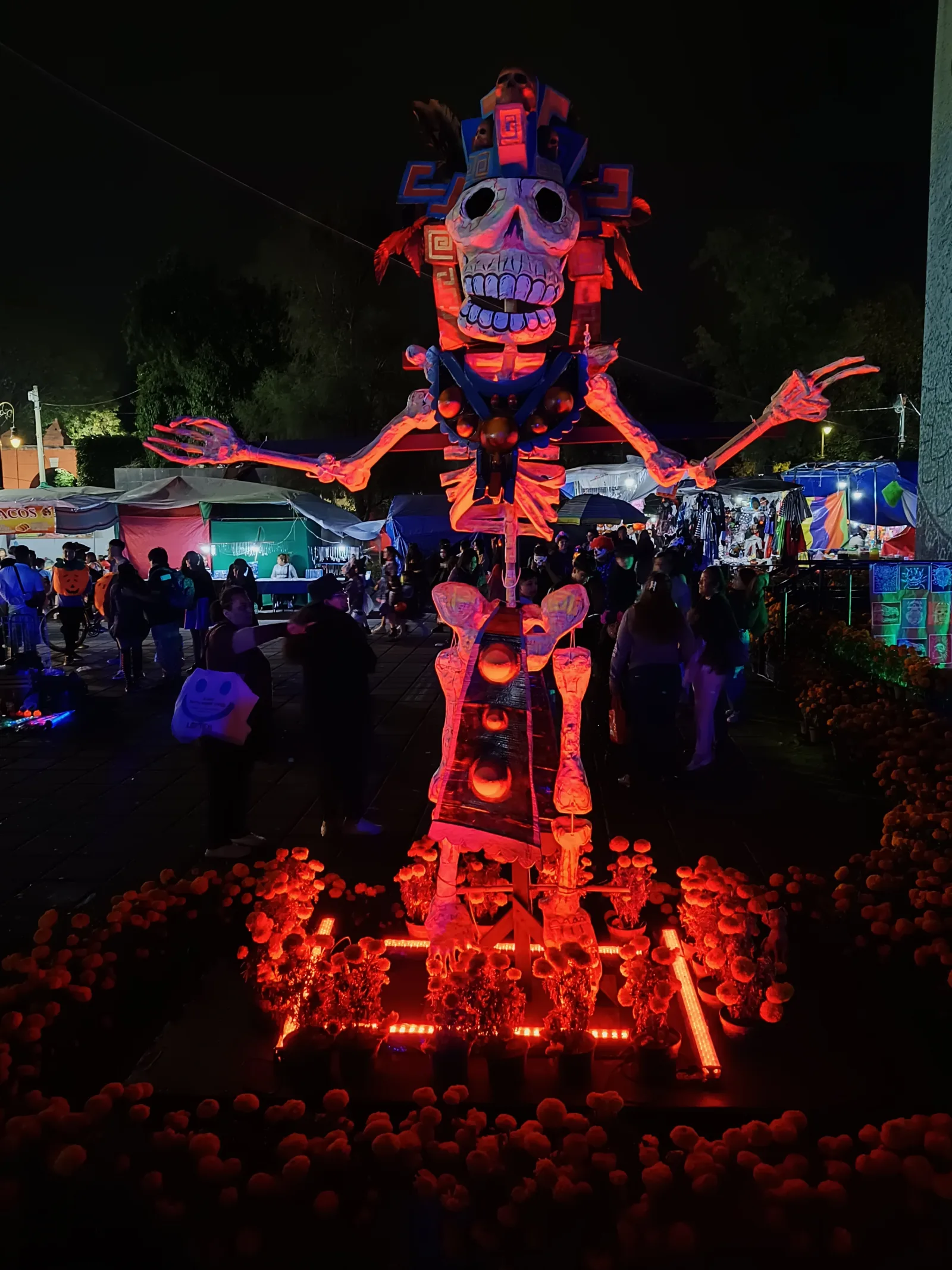
Images travel faster than explanations. A single bright skull, a field of orange flowers, or a candlelit altar can be shared in seconds and separated from the people, names, and offerings that give it context. That is not a reason to avoid photographs. It is a reason to give the photograph a useful caption.
A good caption answers a small version of the three questions above. It names the thing shown, identifies the setting when that information is public, and avoids making a broad claim about all Mexican families. “A public Día de Muertos installation with cempasúchil flowers” says more than “spooky season.” “A community ofrenda honoring local families” gives a viewer somewhere honest to begin.
This practice is especially useful for classrooms and workplaces. If a display is intended to teach, the explanatory card should come before the selfie cue. A few plain sentences can say that Día de Muertos centers remembrance, that practices differ among communities and families, and that the objects were placed for a reason. Visitors do not need a quiz to benefit from that context. They need enough information to recognize that the display is not a generic visual theme.
The same care applies to shopping language. A shop can accurately describe a handmade sugar skull as a confection or seasonal craft object. It should be cautious about calling every skull-shaped sweet “Día de Muertos candy,” especially if the item has no relationship to the celebration, its makers, or its communities. Specific words help buyers make specific choices.
There is a generous side to captions, too. They make it easier for a person who has never attended Día de Muertos to enter with curiosity instead of guessing. The aim is not to make every viewer an expert. It is to make the first encounter less likely to turn a family-centered tradition into a detached aesthetic.
The skill behind a small sweet
It is tempting to call a sugar skull “just sugar,” especially when it appears among so many colorful sweets. But “just sugar” overlooks the work of shaping, drying, decorating, writing, arranging, and placing it with care. Small confections often carry large design decisions. A few grams of sugar can become a bright surface for a name, a pattern, and a memory.
That is a useful thought to carry into any candy shop. Before asking only “What flavor is it?” try asking “What is this sweet trying to do?” Some candies are built to crack. Some to stretch. Some to fizz or stain the tongue blue. A sugar skull, in its Día de Muertos setting, can do another kind of work: make a name visible and make a conversation possible.
The next time you see one, let that be the first surprise. Not that a skull can be sweet, but that a sweet can be a form of remembrance. Its colors are not a contradiction to its subject. They are part of the way a living community makes room for the people it loves and misses.