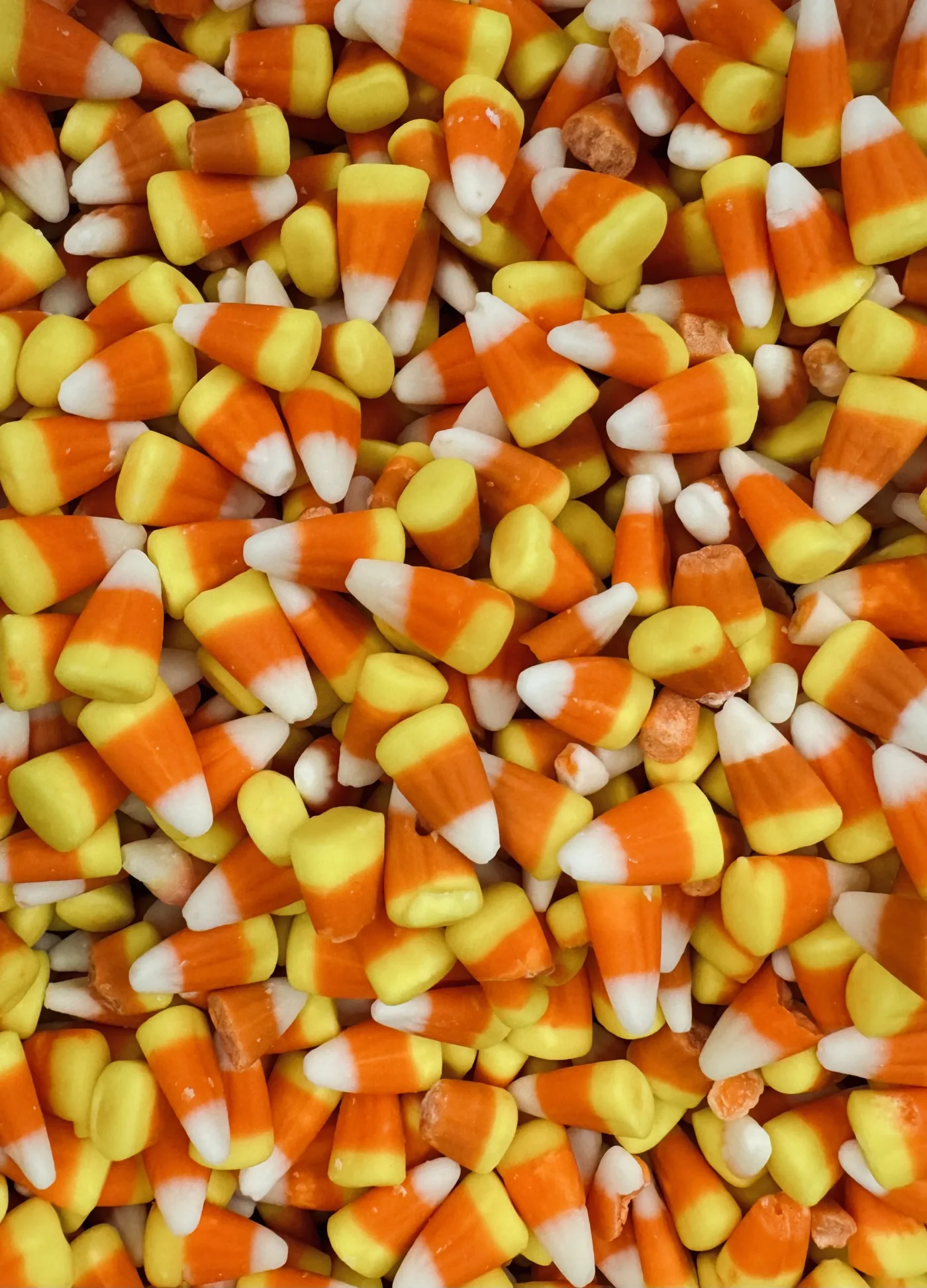
Candy corn is easy to recognize from across a room. The three colors, small pointed shape, and bright harvest palette do most of the work before anyone takes a bite. That is exactly why it makes a good centerpiece for an early-fall table: it gives people something to notice, disagree about, and pass around without needing a big occasion.
It began as a harvest candy, not a Halloween rule
The Library of Congress says a Wunderle Candy Company maker in Philadelphia is sometimes credited with creating the tricolored sweet in the 1880s. The cautious wording matters: an often-repeated origin story is not the same as a documented single inventor.
What is better established is the candy's early agricultural theme. It was sold as “Chicken Feed,” with a rooster on the box and a slogan about something worth crowing for, according to the Library of Congress. The candy made sense as an autumn novelty because corn was closely tied to the harvest. The Goelitz Company helped bring it to a wider public in 1898.
Halloween came later. The Library of Congress connects candy corn's stronger Halloween identity to the growth of U.S. trick-or-treating in the 1950s. The Smithsonian's National Museum of American History also notes that manufacturers increasingly promoted packaged candy for Halloween during that period. In other words, candy corn did not become a fall fixture because one person declared it so; it fit a season, then fit a new trick-or-treat ritual.
The three colors do more than decorate
Candy corn is a useful reminder that a familiar candy can have a visual job as well as a flavor job. Its yellow, orange, and white layers read clearly in a bowl, on a buffet, or beside a name card. That makes a small handful feel more intentional than loose, mixed colors.
Try using the colors as a simple table rule:
- Put candy corn in a clear glass or low bowl so the layers are visible.
- Add one orange item and one pale item nearby, such as napkins, a small pumpkin, or a white plate.
- Leave open space around the bowl. The pointed pieces already provide plenty of pattern.
- Add a second candy only if it gives a different shape or texture.
The point is not to build a styled display. It is to give a small candy bowl a clear focal point. That makes the gathering feel seasonal without turning it into a decorating project.
Make a tiny tasting, not a debate to win
Candy corn has strong fans and strong skeptics. That is useful party material. Rather than asking everyone whether they like it, give the group a short comparison question: what would you put beside it?
Set out four very small samples: candy corn, one fruit chew, one hard candy, and one chocolate or roasted-nut option. Ask each person to arrange the samples from most to least likely to reach for again. Then ask which pair would make the most interesting handful. This shifts the conversation from “good or bad” to texture, sweetness, color, and memory.
Keep packaging and ingredient information close to the table, and serve only items you know your guests can enjoy. A tasting works best when nobody has to guess what is in the bowl.
Use the history as an invitation
An invitation can be as simple as: “Bring one candy you think belongs with candy corn.” Guests might choose a salty snack, a caramel, a sour piece, or a candy they remember from school. The old “Chicken Feed” name gives people a starting story, but their choices make the table current.
If you are filling in a few contrasts, the Pearls Candy & Nuts hard-candy aisle is one practical place to browse for a different texture. For a broader mix, its online aisle groups candy, chocolate, nuts, and other snack options in one place. Choose only what fits your guests and your theme.
Let one odd little candy mark the season
Candy corn does not need to carry an entire party. A bowl, a few comparison pieces, and one good historical detail are enough. Its value is not that everyone agrees it is perfect. Its value is that a tiny, unmistakable sweet can turn an ordinary early-fall visit into a small shared ritual.