Black licorice has a talent for ending polite candy conversations. One person calls it rich, herbal, and comforting. Another says it tastes like medicine, pepper, or a dare. Both reactions make sense because the flavor is not built around a single easy note. It is sweet, aromatic, slightly woody, sometimes salty, and often delivered in a chewy form that asks for more attention than a quick fruit candy.
The useful way to approach black licorice is not to force yourself to love it. It is to give the flavor enough room to explain itself. A candy can be unfamiliar without being a mistake. The root behind the name, the aroma family it shares with anise and fennel, and the different shapes used for ropes, pastilles, and firm pieces all change what arrives first and what lingers.
This guide is for curious tasters, including people who have only ever traded the black pieces away. It separates the botanical ingredient from the broad “licorice” flavor category, gives you a small way to taste without committing to a whole bag, and explains why the label matters more here than it does with most candy.
Start with the root, not the rope
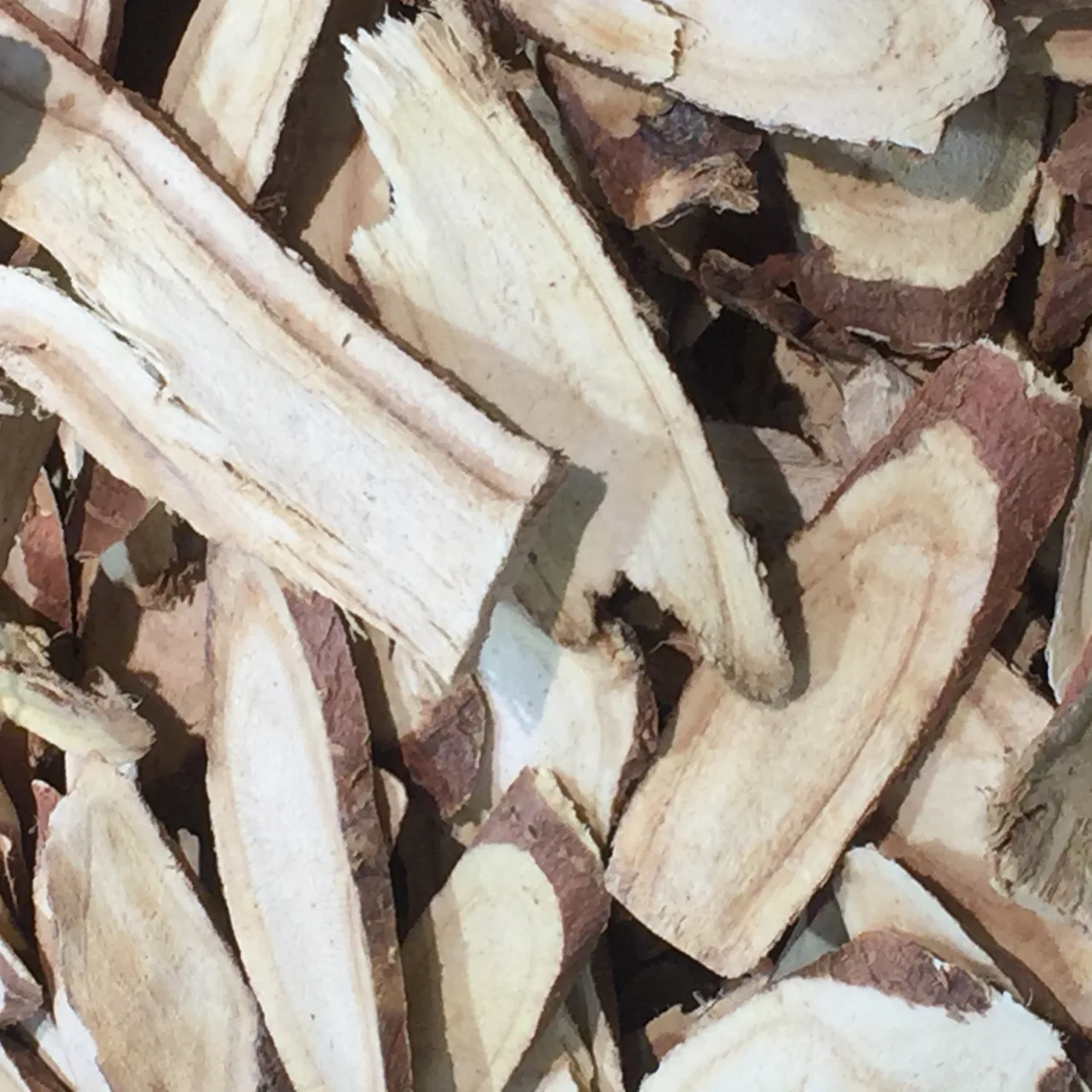
Licorice is not simply a color or a candy shape. It comes from the roots and underground stems of plants in the Glycyrrhiza genus. The close-up above shows sliced licorice root, which looks nothing like the glossy black rope people often picture first.
The name covers more than one botanical source. A USDA Agricultural Research Service summary notes that commercial licorice is supplied by roots and stolons of several Glycyrrhiza species; the genus has roughly 16 to 20 species, mainly from Asia and Europe. That is a useful bit of context, not a reason to turn every candy aisle into a botany exam. It simply explains why “licorice” is a broader raw-material story than a single familiar black sweet.
The root has a sweet, dark, unmistakably herbal character. Its best-known constituent, glycyrrhizin, is part of why real licorice root can register as sweet before ordinary sugar has done all the work. PubChem’s licorice-root record identifies Glycyrrhiza glabra as a plant whose roots are widely used as a flavoring in food and candy and notes that the root contains glycyrrhizin. The important tasting point is modest: “black licorice” is not automatically shorthand for plain sugar dyed black. In some candies, the root or an extract is part of the point.
That does not mean every black candy has the same formula. A label, rather than the color, is the honest guide to a specific product. A candy maker can build a licorice-like impression from several flavor materials, sweeteners, salts, and textures. Treat the name as a direction, not a complete ingredient list.
Why the flavor divides a room
Many favorite candies make one clear request: sweet, sour, chocolatey, fruity, minty. Black licorice asks for several kinds of attention at once. Its sweetness can be round and slow instead of bright. Its aroma can seem warm, resinous, peppery, or cool. Its finish may stay in the mouth after the chew is gone.
That long finish is a large part of the disagreement. Fruit candy usually announces itself quickly and then fades. Black licorice often arrives in stages. The first impression may be sugar and chew. Then an aromatic note rises. Finally, a darker, almost root-like taste remains. If you dislike the final stage, the whole experience can feel like a surprise you did not order. If you enjoy it, the same persistence feels like depth.
Words help, provided they are used as invitations rather than verdicts. Try describing a small piece with one word from each of these pairs:
- bright or dark
- clean or earthy
- soft or firm
- quick or lingering
- sweet-first or aroma-first
There is no correct combination. The little vocabulary exercise keeps the response specific. “I do not like it” is useful information; “the aroma stays after the sweetness is gone” tells you what to try differently next time. You may prefer a softer piece, a saltier one, or simply a smaller sample.
Licorice and anise are relatives in the nose, not twins
People often use “anise” and “licorice” as if they name the same flavor. They do not. Licorice refers to the Glycyrrhiza root; anise comes from a different plant. The two can nonetheless feel close because their aromatic profiles overlap in ways our noses recognize.
The National Library of Medicine’s LiverTox overview of licorice explains that the root’s sweetness and aroma involve glycyrrhizin and volatile oils similar to those in anise and fennel flavorings. “Similar” is the key word. It does not make the ingredients identical, and it does not tell you what is in every piece of candy. It does explain why someone who enjoys fennel seed in food or the perfume of anise may find a useful entry point into black licorice.
Try a low-stakes aroma comparison. Open a licorice candy, but do not eat it yet. Smell it once from a short distance. Then smell a separate food or drink you already know contains anise or fennel. Notice whether both seem sweet-spiced, cool, or floral. Now taste the candy slowly. The mouthfeel, sugar, and any salt will make the total flavor different from the aroma alone.
This is not a test to prove that two foods are “basically the same.” It is a way to notice why the connection gets made in the first place. Taste is a collaboration between smell, texture, temperature, memory, and expectation. Black licorice changes radically when you give the nose a turn before the sugar arrives.
Shape is part of the flavor delivery
A licorice rope, a soft pastille, a hard wafer, and a tiny chew can use related flavor ideas while feeling like different candies. Shape changes speed; speed changes the order in which you notice things.
A long rope asks you to bite, pull, or chew. That repeated chewing keeps aroma moving and can make a strong flavor feel increasingly present. A small pastille gives you a single, compact chew, so the finish may seem more concentrated. A hard piece dissolves more slowly and can let the aromatic note build before the candy is gone.
The Smithsonian’s London Licorice Wafers tin is a lovely reminder that form has long mattered to this category. The museum describes a small tin that once held licorice wafers made in England and sold for five cents. The object does not prove a complete history of licorice candy, but it does preserve a specific example of a compact, portable form. A wafer is not merely a smaller rope; it creates a different pace and therefore a different tasting experience.
If a black rope felt overwhelming, do not assume the flavor is permanently off the table. Try a smaller, firmer format or one piece after a meal instead of during a sugar-heavy tasting. If a hard piece felt too intense, a softer texture may spread the same flavor across a longer chew. The material is part of the message.
Make a two-piece tasting, not a dare
The best way to meet a challenging flavor is usually a small, deliberate comparison. You need only two pieces: one black-licorice candy and one familiar plain candy or cracker to reset your palate. Water is enough to drink.
- Look at the first piece. Is it shiny, matte, powdered, twisted, or molded? The surface gives a clue about texture before you taste.
- Smell it once. Keep your first impression simple: sweet-spiced, herbal, dark, or unfamiliar.
- Take a small bite. Let it sit for a moment before chewing fully. Notice whether sugar, salt, or aroma arrives first.
- Chew slowly. Ask when the flavor turns most intense: at the first bite, halfway through, or after the candy is nearly gone.
- Reset. Take water or a bite of the plain item. Then decide whether you want another small piece. You do not have to finish the sample to have learned something.
This method avoids the common trap of tasting black licorice in a mixed candy bowl after several loud flavors. Sour sugar, chocolate, and fruit oils can make its herbal finish seem stranger than it is. Give it a quiet moment. It may still not be your candy, but at least it will have received a fair hearing.
Read the label when the root is the point
Most candy tasting can stay happily casual. Licorice deserves one extra moment of label reading because “licorice” can mean a flavor profile, a botanical extract, or both. Check the ingredient list of the exact item rather than assuming every black candy contains the same amount of root-derived material.
That distinction is also why this article stays focused on flavor, not health advice. The National Center for Complementary and Integrative Health says licorice root is generally safe as a food ingredient, while warning that glycyrrhizin can cause serious adverse effects when consumed in large amounts or over a long period, especially for some people with existing health conditions or certain medicines. The page advises people who take medication to speak with their health-care provider before using licorice or other herbal products.
For a casual candy sampler, the practical conclusion is uncomplicated: do not turn a strong botanical candy into an unexamined daily habit, and do not use a candy article as personal medical guidance. If you have a health concern, take medicine, are pregnant, or are considering licorice-root products beyond ordinary food use, use the label and a qualified professional as your guide.
That small note does not make black licorice less fun. It makes the category easier to approach honestly. The flavor has history, texture, and aroma; it also comes from a plant with real chemical constituents. Both facts can fit in the same bowl.
Build a better candy bowl for the licorice person
Black licorice is often treated as the unwanted outlier in an assorted mix. A better strategy is to give it companions that clarify what it does. Pair one small licorice sample with something crisp and plain, something minty, and one gentle fruit candy. The contrast makes its qualities easier to name:
- A plain cracker or unsalted nut reset makes the herbal finish more visible.
- A mint candy can make licorice seem warmer and more root-like by comparison.
- A mild fruit candy can show how much longer the licorice aroma remains.
Keep the samples small. This is a flavor map, not a sugar challenge. If you are assembling a mixed assortment, Pearls Candy & Nuts’ licorice aisle is a verified place to browse the category by form and style. Use the exact product page and its label for ingredients and allergen information; a category page is a starting point, not a substitute for the package.
The reward for giving black licorice its own place is not that everyone suddenly becomes a fan. It is that the candy stops being a joke. It becomes one deliberately intense piece among lighter, quicker flavors—a useful dark note rather than a surprise left at the bottom of the bowl.
Let the finish have the last word
Black licorice does not ask to be universally loved. It asks for patience. The root brings a story that is broader than one plant species, the aroma has cousins in anise and fennel, and the candy’s shape decides how fast the flavor speaks. A glossy rope and a small wafer may share a name while offering entirely different routes into the same dark, sweet territory.
The next time you find a black piece in an assortment, do not rush to trade it away. Smell it first. Take a small bite. Notice what remains after the sugar has faded. You may still decide it is not for you. But you will know whether you dislike the root, the aroma, the chew, or simply the surprise—and that is a much more interesting argument to have with a candy.