The best piñata moment is never only the break. It is the pause beforehand: people looking up, somebody holding the rope, a song or a count beginning, and a bright object becoming the center of a room. Then there is the instant afterward, when what was hidden becomes shared. Candy is part of that pleasure, but it is not the whole story.
That distinction is worth keeping. A piñata can appear at a birthday party almost anywhere, yet it also belongs to living Mexican and Latin American traditions, especially the winter celebrations known as Las Posadas. A good host does not need to borrow a whole tradition in order to enjoy a festive candy-sharing moment. They do need to understand enough to avoid treating a meaningful craft and ritual as a disposable party prop.
This guide offers that middle path. It explains what the classic seven-pointed star means in its Las Posadas context, follows the journey from clay pot to paper creation, and gives a practical plan for choosing and sharing treats with less scrambling and more care. The goal is not a bigger pile of candy. It is a better moment around it.
The star has a story before the party starts
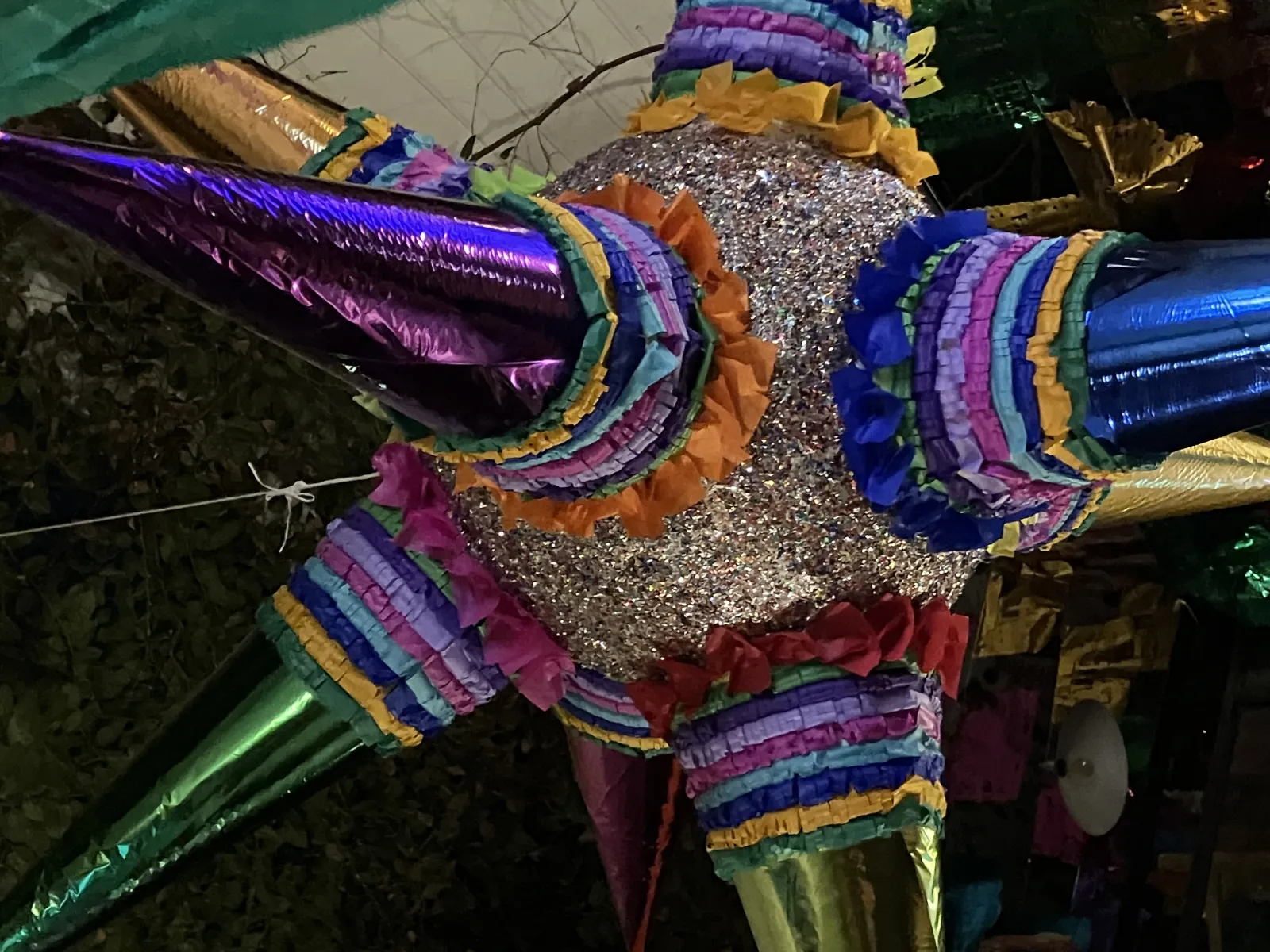
The English word “piñata” may make many people picture a cartoon character at a birthday party. The classic Christmas form in Mexico is very different: a round body with seven pointed cones. The Smithsonian Center for Folklife and Cultural Heritage describes the seven-pointed star used for Las Posadas as a design that refers to the star of Bethlehem and the seven deadly sins.
That symbolism is part of a religious and communal setting, not a generic decoration code. Las Posadas takes place over nine nights before Christmas and centers on processions that recall Mary and Joseph seeking shelter. The celebration after the religious observance may include food, music, an aguinaldo—a small Christmas gift—and the breaking of a piñata. In the Smithsonian account, an aguinaldo can include fruit, candies, and peanuts. The word is a helpful reminder that the treats are meant to be given, not merely won.
Mexico’s National Institute of Anthropology and History places the spread of the Christmas-posada tradition in Acolman, in the present-day State of Mexico, where Augustinian friars established seasonal celebrations in the latter half of the sixteenth century. Its history of Acolman’s posadas and piñatas describes an early piñata as a clay pot containing fruit and sweets, covered in paper and fitted with seven points.
It is tempting to compress all of that into a single origin tale. Better not to. Accounts of the piñata often trace connections among Asian and European customs, Spanish Catholic practice, and Indigenous Mexican December observances. The details are complex, and “the origin” is not a contest with one tidy winner. What can be said plainly is that the piñata became deeply rooted in Mexican culture and that the seven-point star carries specific meaning in the Las Posadas tradition.
If your event is a Las Posadas celebration, let people from that tradition lead the choices: the songs, the order of events, the food, and the kind of piñata. If it is an ordinary birthday or neighborhood party, a bright animal or geometric shape can be a cheerful choice without pretending to recreate a religious custom. Context makes the difference.
A paper craft that holds a surprise
The ordinary party version makes a piñata look simple: hang, swing, scatter, cheer. Look closer and it is a small piece of engineering. It must be light enough to hang, decorative enough to announce itself, and strong enough to conceal its contents until the intended moment. Its paper fringe has a job beyond color. The layers turn a basic form into something that seems to move even when it is still.
The Library of Congress catalog describes the piñata in a 1970 Mexico photograph as a brightly colored paper container filled with candy or toys and used at celebrations such as Christmas. The photograph, “Piñatas for Christmas,” shows several figures hanging at vendor stalls. It makes an important point quietly: piñatas are made objects. Someone chooses the form, cuts the paper, builds the structure, and prepares the surprise.
That work is one reason a handmade piñata deserves more attention than the five minutes at the end of a party. Before the event, ask who made it and whether it has a use beyond being broken. A decorative piñata may be intended to remain intact. A family might prefer to pull strings, open a flap, or hand out the contents rather than strike it. These are not lesser versions of the event. They are choices about care, participation, and what the object means to the people present.
If you are buying one, a useful question is not “Which character is biggest?” It is “What kind of moment are we making?” A small pull-string piñata can suit a young group, an indoor gathering, or a party where you want every person to receive a turn. A traditional star may be appropriate when its cultural setting is understood and welcomed. A reusable decorative piece may be the right answer when the craft itself is the attraction.
The filling is a tiny portrait of the host
The classic mental picture is a rain of candy. Historically and culturally, the contents can be broader. Mexico’s agriculture department notes that piñatas for posadas may contain sweets, peanuts, sugar cane, and seasonal fruit. That mixture makes sense: a piñata can be a small harvest of textures, colors, and generosity rather than a single-type sugar dump.
For a contemporary party, build the filling with the same idea in mind. Choose treats that vary in shape and texture, then make a plan for the people who will collect them. A handful of small, sturdy, individually wrapped candies is easier to share and easier to identify than a bag of unwrapped loose pieces. Add a few non-food surprises if they suit the event: temporary tattoos, pencils, stickers, or tiny noisemakers. The point is not to make the prize bag enormous. It is to give the scatter some range.
There are a few practical limits worth respecting:
- Keep the pieces light. A piñata is not a parcel service. Heavy objects can turn a happy drop into an unpleasant one.
- Use closed packaging for food. Individually wrapped candy is more forgiving of outdoor surfaces, small hands, and the occasional enthusiastic scramble.
- Plan around allergies without guessing. If you include food, keep the wrappers available and offer a separate, clearly chosen option for guests with dietary needs. Do not promise that a mixed candy assortment is allergen-free.
- Skip hard projectiles. Large jawbreakers, glass, sharp toys, and anything that could hurt a person or damage a room do not belong in a falling assortment.
For the candy itself, contrast works better than sheer quantity. One fruit chew, one wrapped caramel, and one mint or chocolate piece make a more interesting handful than three nearly identical items. Pearls Candy & Nuts’ bulk-candy aisle is one place to browse types and wrappers when you are planning an assortment. Check each exact product page and package for ingredients and allergen information before serving it.
If an event has many guests, do not rely on the break to provide everyone’s complete favor. Prepare small bags or cups of treats in advance and treat the piñata’s contents as the shared spectacle. That one decision removes a surprising amount of pressure. Children can enjoy the reveal without feeling that the fastest hands took the whole party home.
Give the surprise a sensible time slot
Timing changes the mood as much as the filling. Schedule the piñata after guests have arrived, had water, and had a chance to settle into the party. It is hard to explain a safety rule to a group that is already tired, hungry, or wearing party hats at a sprint. A short announcement before the activity can cover the useful basics: where to stand, how turns work, what happens when it opens, and where to find a prepared treat bag afterward.
Leave enough time for the last step. Rushing directly from the break into departure makes the spectacle feel like a starting gun. A few calm minutes for snacks, photos, or a thank-you lets people compare what they found and makes the moment feel complete. The best piñata plan has room for anticipation, a safe release, and a soft landing.
Make the break a shared game, not a race
The most memorable piñata moment has a clear beginning and end. It does not need chaos to feel exciting. A short plan gives the excitement somewhere safe to go.
Start by choosing a clear open area. Adults should decide where people stand, where the person taking a turn stands, and where everyone waits. If there is a swing or a stick involved, make one rule absolute: nobody enters the striking space until the object has stopped moving and the holder says it is clear. A grown-up should manage the rope or the release point; do not make a child responsible for both the blindfold and the crowd.
Then choose a turn format that fits the group. Very young children may enjoy pulling a ribbon one at a time. Older children can take short, counted turns. A mixed-age group may work best when everyone gets one chance before anyone gets a second. The important thing is that the rule is announced before the energy rises.
Blindfolds are optional, not required. They can be playful in one group and uncomfortable or unsafe in another. If you use one, guide the participant to the starting position, keep the swing area clear, and remove the blindfold before the collecting begins. There is no prize for making the game more difficult than the guests enjoy.
When the piñata opens, call for a pause before the gathering starts. A simple phrase—“Hands down for five seconds”—gives the adults time to make sure the swinging has ended and gives smaller guests a chance to see what happened. Then let people collect a modest number of items or direct them to their prepared favor bags. A little structure lets the joy spread instead of concentrating in one frantic corner.
A respectful host asks better questions
Good party planning begins with curiosity. That is especially true when a familiar-looking object has roots outside your own family’s traditions. You do not need a graduate seminar before serving candy, but a few questions can keep the event thoughtful.
Ask whether someone in the group has a connection to Mexican or Latin American celebration traditions and would like to shape the moment. Ask whether the party has a seasonal or religious context that calls for a particular form, song, or food. Ask whether the piñata is meant to be broken at all. And ask whether the host’s idea of “fun” leaves room for guests who do not want to swing, scramble, eat candy, or be photographed.
These questions do not make a party stiff. They make it more hospitable. A child who does not want to take a turn can hold the count, choose the next participant, or help distribute bags. An adult who knows the song may wish to lead it. A guest with food restrictions can receive a comparable treat without being singled out after the fact. The shared moment becomes wider than the action of breaking something open.
There is also no need to force one piñata to carry every idea about Mexico. The seven-pointed star has a real setting and a real history. Let it have that dignity. If you want a birthday game, choose a form that suits the birthday. If you are joining a Las Posadas celebration, arrive ready to participate on the community’s terms. Both choices can be joyful because neither asks the object to be something it is not.
The best souvenir is the story everyone can tell
After the wrappers have been gathered and the music has moved on, what remains is rarely a perfect inventory of candy. People remember the person who waited patiently for a turn, the little one who laughed at a pull string, the star turning overhead, or the friend who made sure everyone had something to take home.
That is the hidden lesson inside a piñata. Its pleasure comes from anticipation, but its meaning comes from distribution. The classic star reminds us that an object can hold history as well as treats. The filled paper form makes a small promise, and the group decides how to keep it: with attention, safety, and enough generosity for the surprise to reach everyone.
Plan for that, and the candy will do what candy does best. It will mark a moment, start a conversation, and give people something sweet to share.