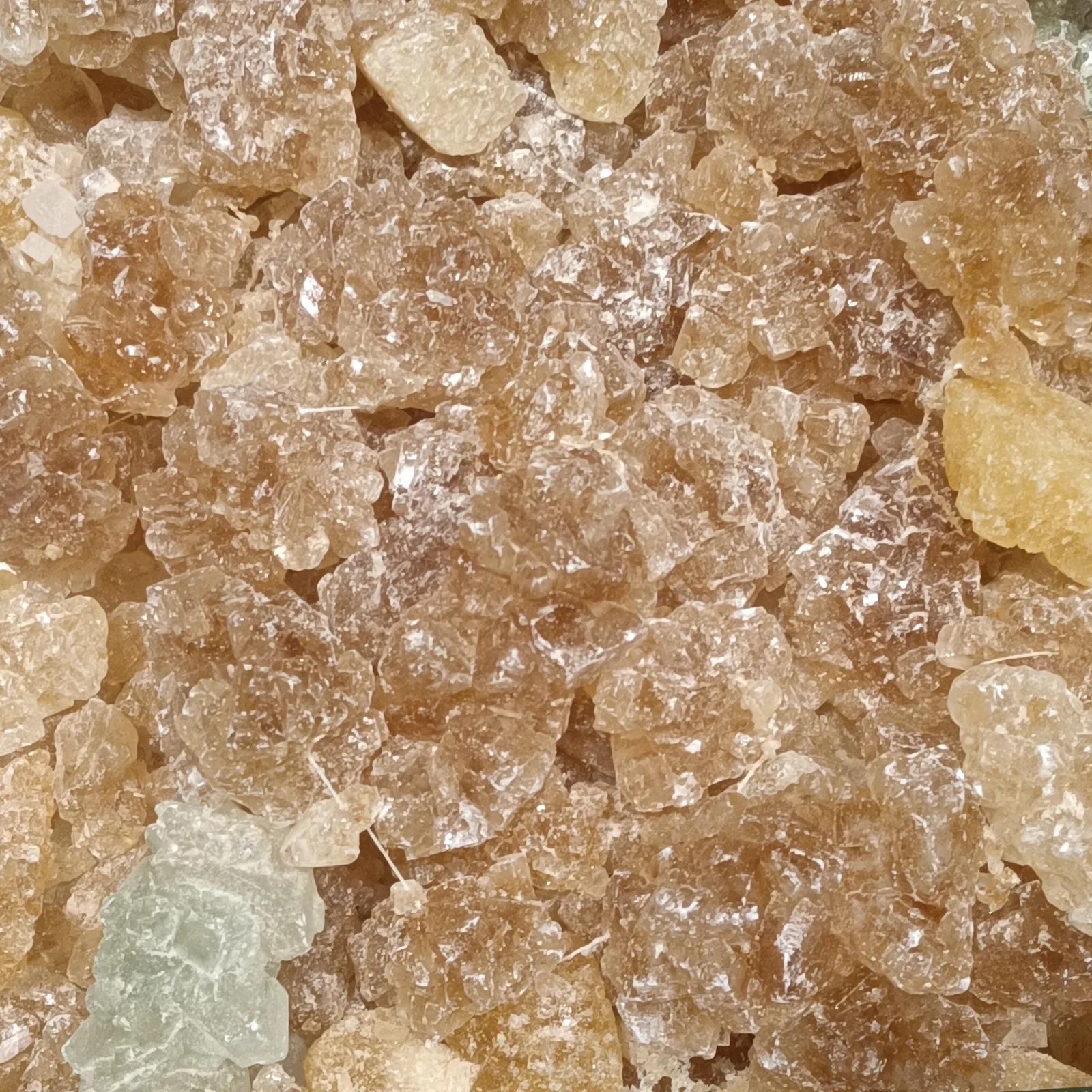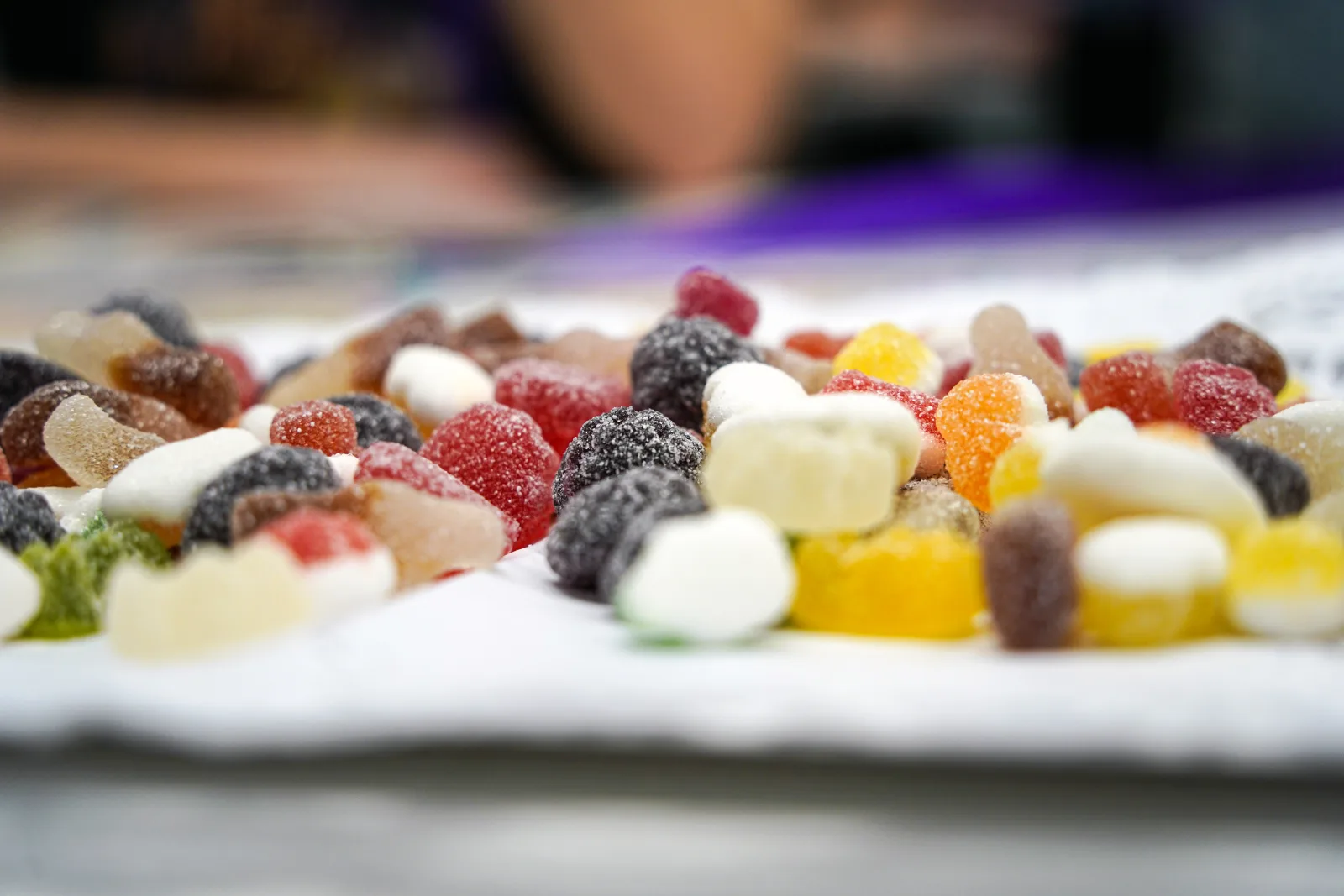
Candy has a private life before it reaches your mouth. A gummy can bend, a caramel can stretch, and a hard candy can crack cleanly in two. We usually call those differences “chewy,” “soft,” or “crunchy,” then move on. Put the same candy in a freezer overnight, though, and the difference becomes much easier to see. A once-flexible piece may stiffen. A chewy one may tear instead of stretch. A crisp piece may seem even more eager to snap.
That is not a parlor trick. It is a compact way to notice how temperature changes a material. The experiment needs no cooking, special kit, or expert vocabulary. It only needs matched pieces of a few familiar candies, a freezer, a plate, and a willingness to describe what you actually observe. The goal is not to smash food or find a “winner.” It is to make texture visible before you taste it.
This is a good project for a quiet weekend, a classroom-style family activity, or a candy tasting that gives everyone something better to say than “I like this one.” Start with gentle handling and small samples. By the end, you will have a simple map of which candies bend, which tear, and which break with a clean snap—and a sharper sense of why each texture feels so different.
Candy is a material before it is a flavor
Engineers use the word fracture for the way a material separates when it is bent, pulled, or pressed. That language may sound severe for a piece of candy, but it is useful because it asks a specific question: does the material change shape first, or does it crack with very little warning?
The University of Delaware’s K–12 engineering lesson on chocolate composites gives two plain-language categories. A brittle material is rigid and cracks; a ductile one can bend, stretch, or change shape before it finally separates. Neither word is a compliment or criticism. A windowpane is useful partly because it is rigid. A rubber band is useful partly because it is not. Candy can give you both behaviors in a form that is easy to hold.
Think about three pieces from a typical candy bowl. A hard candy often resists bending and then breaks. A gummy may flatten, bend, or elongate first. A chewy taffy-type piece may stretch into a thin strand before it tears. The ingredients and manufacturing process matter, but the immediate question for this experiment is simpler: what does this piece do today, at this temperature, when you apply a small, steady force?
The American Chemical Society’s candy-fracture activity uses matching candies at room temperature and after a night in the freezer. Its key observation is that many candies become stiffer and more brittle when cold. At warmer temperatures, the small molecules and structures inside a candy have more freedom to move and stretch. Cold reduces that movement, so a candy that once gave way gradually may have less give.
This does not mean every piece will behave in exactly the same way. A candy can vary by brand, size, filling, moisture, age, and recipe. That variation is a reason to use matched pairs rather than a reason to abandon the test. You are not trying to write a universal law about all gummies. You are comparing one piece with its own twin.
Choose a small, useful lineup
The best lineup has contrast, not quantity. Choose two matching pieces from each of two or three texture families. Keep one piece from each pair at room temperature. Put its twin in the freezer. If you want a fourth comparison, add it only if you can describe why it belongs.
Here is a reliable starting set:
- A gummy: bear-shaped, fruit-shaped, ring-shaped, or another compact gummy. Look for a piece that can bend without a filling leaking out.
- A chewy or taffy-type candy: choose a small piece that is normally pliable rather than a sticky, filled bar.
- A hard candy: use one that is individually wrapped and easy to observe without forcing it to break.
- Optional chocolate: a plain small piece can show a clean snap, but it is an extra comparison, not a requirement.
You do not need to buy a giant assortment for this. Pearls Candy & Nuts’ gummies aisle and chewy-and-taffy aisle are useful places to choose one clearly gummy sample and one clearly chewy sample. Keep the project focused: a pair from each family is enough. Read the package if ingredients or allergens matter to anyone taking part, and do not assume that two candies with a similar shape have the same contents.
Before you begin, make a simple label system. Mark two plates or two sections of a plate room and cold. Put one candy from each pair on the room side. Place the matching cold samples in a closed food-safe container or bag in the freezer. Keeping the groups separate prevents the most common mistake in any comparison: losing track of which piece was which.
The freezer is not a magic quality upgrade. It is a controlled change. The candies should be the same type, the same approximate size, and tested in the same way. That is what makes the result interesting.
Set up a fair freezer test
The ACS activity leaves the cold samples in the freezer overnight. That is a practical schedule because it gives every sample time to reach a similar cold state without turning the project into an all-day watch. Put the container somewhere it will not be crushed by frozen vegetables or forgotten behind the ice tray. Leave the room-temperature samples in their original wrappers or another clean, covered container nearby.
Make an observation card before the cold samples go in. A good card has four short columns:
| Candy | Temperature | Before bending or pulling | What happened under gentle force | | --- | --- | --- | --- | | Gummy | Room | | | | Gummy | Cold | | | | Chewy candy | Room | | | | Chewy candy | Cold | | | | Hard candy | Room | | | | Hard candy | Cold | | |
The “before” column is more helpful than it looks. Notice the surface, shape, and first feel through the wrapper. Is the gummy glossy and rounded? Does the chewy candy yield slightly when pressed between clean fingers? Does the hard candy feel unchanged and rigid? You are collecting a baseline, not trying to guess the ending.
The next day, take out only one cold pair at a time. The comparison is clearest while the freezer sample is still cold. Place the room-temperature twin beside it. Unwrap only when you are ready to observe, and use clean, dry hands. Avoid using your teeth as a test tool, especially with cold hard candy. You can learn more safely by looking and gently handling than by trying to bite a frozen piece.
For gummies and chewy pieces, start with a slow bend. Do not yank. Watch whether the sample curves, flattens, stretches, develops a tear, or breaks. If it separates, look at the new edges. Are they smooth and pulled-looking, or sharp and irregular? Use words that describe the event rather than words you think belong in a science report.
For a hard candy, do not try to force a dramatic shatter. It may be enough to note that both temperatures leave it rigid. If it naturally cracks under a gentle, normal bend, keep it on the plate so any fragments stay contained. A clean break can be a useful observation; scattered pieces are not a better result. Chocolate, if you include it, is also best tested over a plate with a gentle bend and no need for a big snap.
What the freezer changed—and what it did not
When the cold gummy feels firmer, it has not become a new food. It has changed how it responds in that moment. The ACS activity describes this in everyday terms: when candy is warm, its components can move and stretch more; when it is frozen, they move and stretch less, so breaking is more likely to be brittle. This is why a room-temperature taffy-type candy can pull into a strand while its cold twin may resist and tear sooner.
The change is easiest to see in candy because the samples are small and the starting textures are so different. It is also why a hard candy might show a subtler change than a gummy. A hard candy is already relatively brittle at room temperature. The freezer may make it feel even less forgiving, but it did not start the experiment as a flexible material. Your notes can say “little visible difference” when that is what happened. A careful no-change result is still a result.
Temperature is not the only influence on candy texture. Moisture matters, too. The Exploratorium’s guide to sugar in candy explains that candies can be crystalline or noncrystalline, and that recipes for smooth noncrystalline candies are designed to control crystal formation. This is one reason two candies that are both “sweet” can feel entirely unlike each other. A hard candy can behave like a glassy solid; a gummy or chewy piece has a different structure and a different relationship with water and other ingredients.
You do not need to identify every ingredient to get a useful observation. Instead, separate what you saw from what you think explains it. “The cold gummy bent halfway, then tore” is an observation. “Cold made it more brittle because it had less ability to stretch” is an explanation supported by the ACS activity. Keeping those two sentences distinct makes your notes more honest and more interesting.
Give the results better words
Once the samples have been tested, turn the data card into a small texture map. Put each candy on a simple line from bends first to breaks first. Then add a second label: room or cold. You may find that the chewy candy moves farther toward “breaks first” after freezing, while the hard candy barely moves because it began near that end of the line.
Here are useful words to try:
- Bends: changes direction without separating.
- Stretches: becomes longer under a steady pull.
- Tears: separates gradually, often after thinning.
- Cracks: develops a visible break with little change of shape.
- Snaps: breaks quickly and cleanly.
- Crumbles: separates into several small pieces rather than one clear break.
These words can make a tasting more social. Instead of asking, “Do you like gummies?” ask, “Did this one tear or snap?” Instead of arguing whether a hard candy is crunchy, ask whether its break looked clean, cloudy, or crumbly. People can disagree about a favorite flavor and still agree on what they saw happen.
You can extend the activity without creating a confusing pile of variables. Repeat the same test with one new texture family on another day. Or compare two gummies with visibly different shapes, while keeping the room-and-cold pairs separate. Do not change temperature, candy type, sample size, and handling method all at once. A small experiment stays useful because it makes one question easier to answer.
End with a calm tasting, not a dare
The observation portion is complete before anyone takes a bite. If the samples are still comfortable and suitable to eat, let frozen pieces warm slightly first and have each person decide whether they want to taste a small portion. There is no prize for eating a very cold hard candy or for finishing every sample. The most valuable part was the comparison.
If you do taste, keep the questions about texture. Did the room-temperature gummy feel springy? Did the cold one feel firmer before it softened? Did the chewy candy’s flavor arrive before or after the stretch? Drink water between samples. Keep original packaging nearby if anyone needs to check an ingredient list. That keeps the tasting simple and lets the labels—not guesses—answer practical questions.
This also gives ordinary candy a little context. A gummy is not merely “soft.” It is a material that can bend and tear. A hard candy is not merely “crunchy.” It can show a brittle fracture. The freezer does not make the candies more sophisticated; it makes their ordinary differences easier to notice.
The useful surprise is already in the bowl
Good science activities do not always need an unusual object. Sometimes they ask you to slow down around a familiar one. A matched pair of candies, a night in the freezer, and a few accurate words can reveal a full before-and-after story: same candy, different temperature, different response.
Keep the notes if the results surprise you. The gummy that stiffened most, the chewy piece that still bent, and the hard candy that looked unchanged all tell you something about the material in your hand. More importantly, they give you a repeatable way to look at candy with fresh attention—one gentle bend at a time.