Nougat can look like a quiet candy. It is often pale, rectangular, and tucked between louder things: chocolate, peanuts, caramel, wafer, fruit, or a bright wrapper. But take a close bite and it reveals a small engineering trick. It is sugar that has learned to hold air.
That is why nougat can be chewy without being dense, and soft without feeling like frosting. A good piece has resistance, then gives way. It may carry roasted nuts, honey-like notes, or a little vanilla. It may be white and airy, brown and crisp, or hidden inside a candy bar with an entirely different personality. The shared name covers a wider family than most people expect.
This guide is for tasting rather than making. It follows the structure beneath the chew, explains why some nougats are fluffy while others are short or crunchy, and gives you a simple way to compare a few pieces without turning a candy break into a laboratory session.
First, decide which nougat you are meeting
The word nougat is used for more than one kind of confection. The version many people picture is light-colored and aerated: a sweet base is whipped into a foam, then set with nuts or other additions. Brown nougat can be firmer or crunchy, sometimes called nougatine in French contexts. And the soft center labeled “nougat” inside a candy bar may be a distinct commercial recipe built for a particular bar’s texture and shelf life.
Those differences are not a problem to solve. They are the reason nougat is interesting. Instead of asking whether a piece is “real” nougat, ask what it is asking you to notice. Is the first impression a cushiony chew, a crisp fracture, a nut roast, a chocolate coating, or a faint pull from a wafer layer? The name tells you to expect a confection family; the bite tells you where in that family you are.
The Mississippi State University Extension food-science manual groups nougat with candies made at the hard-ball stage, when a cooled syrup holds its shape but can still be changed by pressure. That is a useful texture clue, not a universal formula. It helps explain why a soft nougat can resist your teeth for a moment before it yields instead of snapping like brittle or flowing like sauce.
For a first comparison, choose two pieces that look unlike each other: a white nut-studded nougat and a nougat-centered candy bar, or a soft piece and a crisp brown version. Keep the labels nearby. You are not comparing brands; you are comparing structures.
Air is an ingredient, even when you cannot see it
A soft nougat is not merely a sweet paste with nuts mixed in. Its lift comes from a foam. A Texas A&M food-science review describes nougat, like marshmallow, as a confection made by whipping sugar syrup into a foam. That sentence is the whole magic trick in miniature. Tiny air cells change how the candy feels under pressure, how quickly it yields, and how its flavor spreads across a bite.
Imagine the difference between a spoonful of peanut butter and whipped cream. Both can be rich; one is packed and one is full of air. Nougat sits somewhere else again because its sugar structure, protein, fat, and inclusions need to hold together after the whipping ends. The result can be firm enough to cut into neat rectangles yet light enough to seem almost elastic.
That structure explains a common surprise: a nougat can feel substantial without seeming heavy. The chew is not only about stickiness. It is the slow collapse of a set foam. A soft piece may begin with a slight spring, then compact, then release its flavor after a few seconds. If there are nuts, they arrive as an interruption in that otherwise even texture.
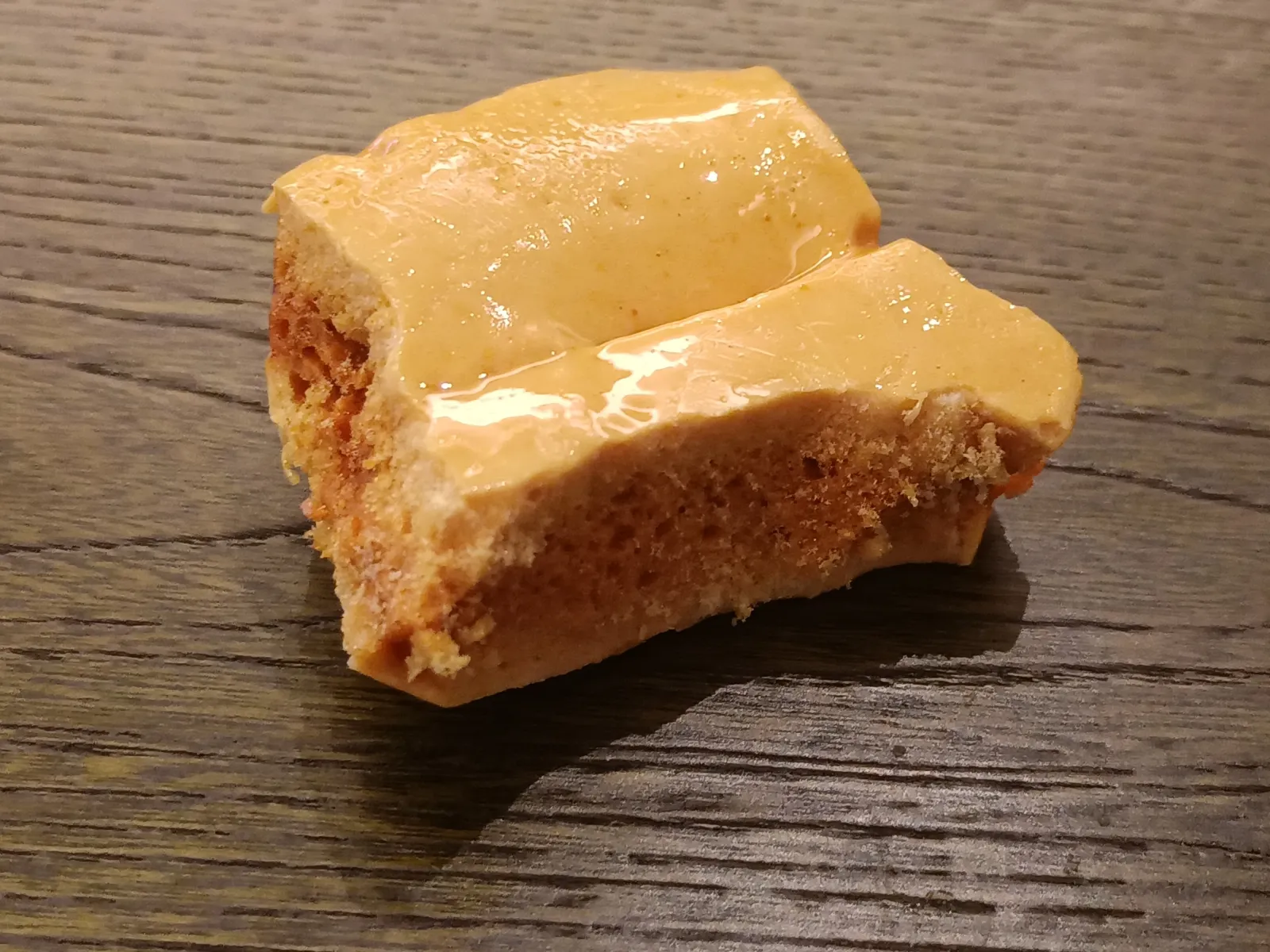
Do a quiet test before you taste. Look at a cut edge. Does it show tiny bubbles, a fibrous pull, a smooth paste, or a grainy break? Then press gently with a clean fingertip. Does it rebound, leave a dent, or crack? These observations are not a verdict on quality. They are a way to notice which structure the candy is presenting.
Chewy, short, and crunchy are different stories
Nougat is especially good at making texture vocabulary useful. “Chewy” is only one possibility. The Texas A&M review notes that nougats can be chewy or grained, depending in part on whether sugar has crystallized. A chewy nougat has a more amorphous, noncrystalline character; a grained or short nougat has some crystallized sugar and breaks more readily.
That word short can sound like a flaw if you have only heard it in a timeline. In food texture, it can describe a clean, tender break rather than a long pull. Think of a cookie that crumbles cleanly instead of stretching, or a candy that gives you a little snap before it dissolves. A short nougat may feel less bouncy and more fragile. A chewy one may stretch gently between molars before it clears.
The contrast becomes obvious if you compare a nutty white nougat with a honeycomb-like candy or a crisp brown nougat. The white candy may ask for patient chewing. The crisp version may fracture right away and leave roasted sugar notes behind. Neither needs to win. They are different answers to the same question: how should sweetness occupy a few seconds of your attention?
When you describe nougat, choose a verb first: pulls, compresses, crumbles, melts, fractures, or sticks. Then add one flavor word: honeyed, toasted, milky, nutty, vanilla-like, or chocolatey. Two words are enough to make a tasting note that you can remember later.
Nuts are not decoration
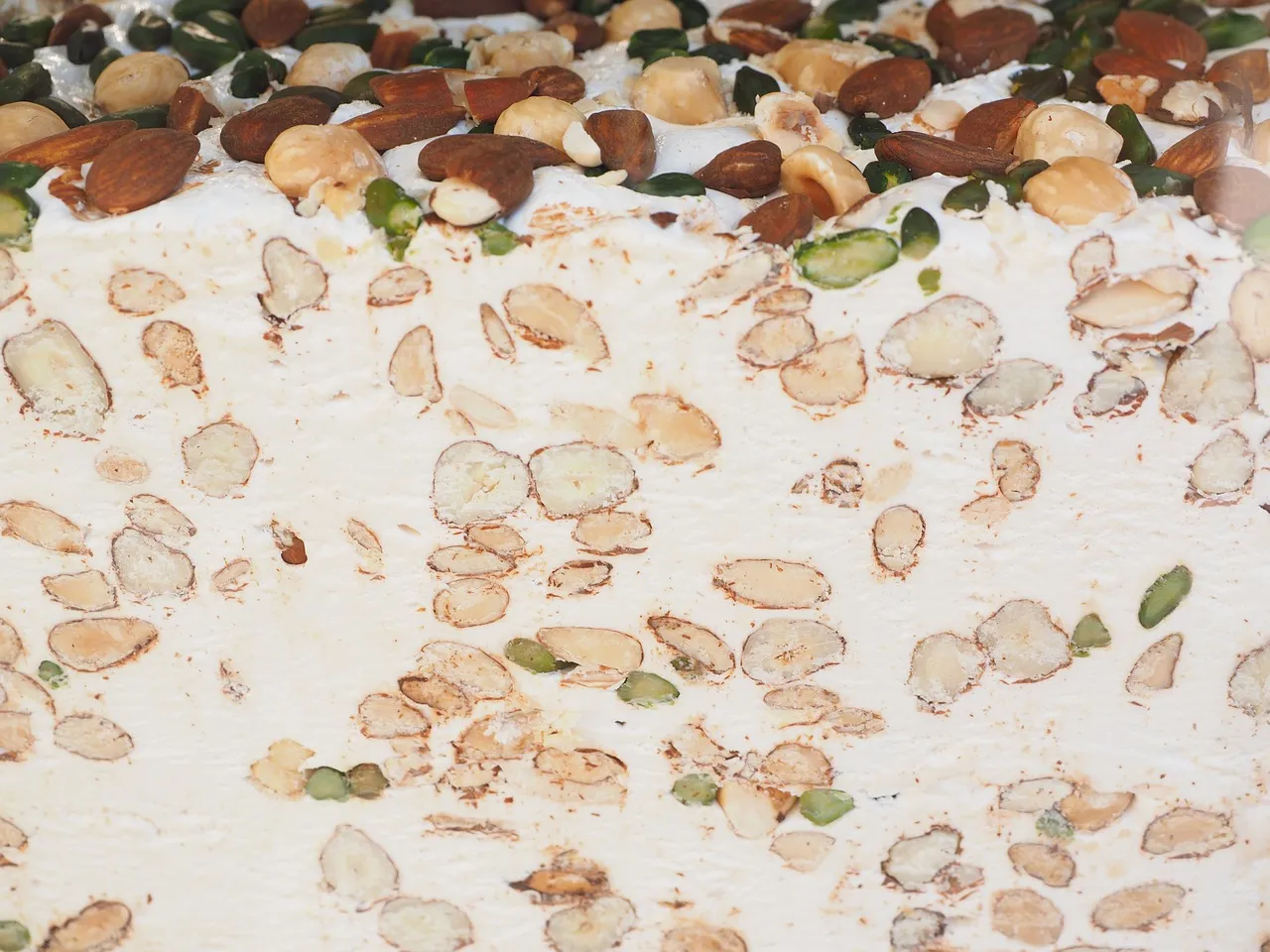
In a slab of white nougat, nuts do more than make a pretty cross-section. They interrupt the foam with crunch, roast, and a little variation in every bite. Almonds, pistachios, hazelnuts, or peanuts can shift the whole personality of the same pale base. A nut with a crisp edge makes the nougat seem lighter. A softer or more finely chopped inclusion makes it feel more continuous.
The visual effect matters, too. A cut piece of nut nougat is a small map: white spaces, brown edges, green pistachio flecks, and irregular shapes that promise a different bite each time. Before tasting, notice whether the nuts sit mostly on top, run all the way through, or appear in large pockets. That pattern can tell you whether you should expect a steady crunch or a few dramatic surprises.
If you are serving a shared plate, name the nuts plainly and keep the original package close. Do not assume that a piece without visible nuts is free from nuts, milk, egg, soy, or other allergens. Nougat can use a wide range of ingredients, and a product’s current package is the reliable source for its specific allergen information.
For people who cannot eat a particular nut, do not make a tasting flight into a puzzle. Give them a separate, clearly labeled choice of candy they can enjoy. The point of a candy comparison is curiosity, not a test of who can decode the ingredients fastest.
The wrapper can tell you where the texture begins
Before opening a nougat-centered bar, look for the surrounding layers. A thin chocolate shell is not just a finish; it creates a quick, clean first break. Wafer adds a dry, crisp interruption before the center begins to pull. Caramel above or below nougat changes the order again: first a bend, then a chew, then the foam. The same pale center can feel entirely different when it has company.
That is why a candy bar is a good lesson in sequence. Take a small bite and pause instead of chewing immediately. Ask which layer reaches you first. Is it chocolate melting, wafer cracking, nut roast, or the nougat itself? Then chew slowly enough to notice whether the center stays separate or blends into the rest. You may discover that what you thought was a favorite nougat is really a favorite contrast between nougat and something crisp.
This is also a useful way to compare a bar with a plain piece of nut nougat. The plain piece makes the foam easier to identify because there is less competing texture. The bar shows how a maker can use the same general idea as an architectural layer: soft center, firm coat, crunchy interruption. Neither form is more authentic. One is a close look; the other is a composed bite.
Build a better small plate
Nougat works best on a tasting plate when the neighboring candies give it room to be soft. Pair it with one crisp contrast, such as a small brittle or a hard mint, and one melting contrast, such as a square of chocolate. The point is not to make a dessert board. It is to make the difference in texture obvious.
Put each candy in its own small space rather than piling everything together. Start with the crisp item, then taste the nougat, then finish with the chocolate. The order moves from quick fracture to slow chew to melt, and it helps you notice how much nougat changes the pace of the tasting. Water between pieces is enough; a strongly flavored drink can bury the subtle nut and vanilla notes you are trying to notice.
If you make notes, give the plate a simple title such as “snap, cloud, melt.” It sounds playful because it is. A good candy tasting should create a memory, not a spreadsheet. The notes are only there to help you find the texture you would like to meet again.
A three-piece nougat flight
The best nougat tasting is small because texture gets tiring when you try too many rich pieces in a row. Choose three contrasting forms and use water as a reset between them.
- Start with a plain or lightly nutty soft nougat. Look at the cut edge before you bite. Notice whether it compresses or pulls, then wait for the sweet flavor to open.
- Move to a chocolate-covered nougat or nougat-centered bar. Separate the coating from the center in your attention. Does the chocolate melt away before the nougat begins, or do they stay together?
- Finish with a crisp or heavily nutty variation. Listen for the break. Decide whether the roasted note comes from the nut, the sugar, or both.
At the end, write one short line for each piece: “springy / almond,” “soft / chocolate,” or “crisp / toasted.” You may find you do not prefer the richest piece. Often the favorite is the one whose texture changes most clearly from beginning to end.
Pearls Candy & Nuts’ nougat aisle is a useful starting place for finding different formats to compare. Read the exact product page and package before sharing, especially when chocolate coatings, nuts, or dairy ingredients are involved. The useful goal is contrast: airy against dense, chocolate-coated against plain, or a long chew against a clean break.
Let temperature change the conversation
Nougat is sensitive to the temperature of the room and the temperature of the person tasting it. A piece eaten very cold can seem firm and restrained. Let it sit briefly, following any package guidance, and it may become more elastic and aromatic. A warm room can make a chocolate coating softer and change where the first bite begins.
This is not a reason to overmanage the candy. It is a reason to give it a fair chance. If a nougat seems tough straight from a cool storage spot, wait a few minutes before deciding that its texture is wrong. If a piece is delicate and soft, handle it gently and serve it on a plate rather than passing it around loose in a warm hand.
Moisture matters as well. The Texas A&M review describes a range of moisture levels in hard and soft nougats, and those differences help explain why storage instructions are specific to each product. A sealed wrapper is part of the candy’s texture plan. Once a package is open, use a clean airtight container if the maker advises it, and avoid turning a humid counter into the candy’s new home.
Nougat rewards a slower bite
Some candies deliver their whole idea in one crack or one burst of sourness. Nougat takes a little longer. It asks you to notice the lift before the chew, the inclusion before the sweetness settles, and the way a small pocket of air changes an otherwise rich ingredient list.
That is what makes it a good counterpoint to candy that is loud, hard, or instantly melting. Nougat has room for a nut to arrive late, for a chocolate coat to disappear first, and for the final flavor to be more toasted than sweet. It is less a single candy than a gentle piece of edible architecture.
The next time you see a pale rectangle in a mixed box, do not save it only because it looks sensible. Break off a small piece. Look at the edge. Give it a moment. You may find that the quietest candy on the plate is the one doing the most interesting work.